Service area
Mold Remediation in Kentucky
Mold problems in Kentucky are common, and we know what homeowners and businesses face when they need thorough remediation.
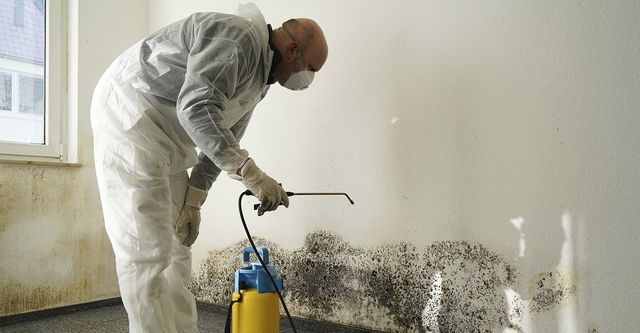
Mold in Kentucky: climate, risk, and what to look for
Kentucky's climate and moisture profile
Kentucky sits in a humid subtropical zone, so summers run hot and sticky with dew points that regularly climb into the 70s. The state averages around 45 to 50 inches of rain a year, and the Ohio River Valley traps moisture against the ground for long stretches. Spring brings flooding along the Ohio, Kentucky, and Green rivers; that standing water and the saturated soil afterward feed mold growth for weeks.
Common mold risk factors in Kentucky
Damp basements and crawl spaces are the usual trouble spots, especially in the older brick and stone homes across Louisville, Lexington, and the eastern coalfields. Many houses sit on unvented or dirt-floor crawl spaces where ground moisture wicks up into floor joists and subfloor. After river flooding, drywall and insulation that stayed wet more than a day or two almost always need replacement, not just drying.
Mold licensing and regulation in Kentucky
Kentucky does not license mold remediation contractors, so there is no state mold permit to ask for. Look instead for crews with IICRC certification — specifically the AMRT (Applied Microbial Remediation Technician) credential and work performed to the ANSI/IICRC S520 standard.
Official resources
By metro area
Kentucky cities by metro area
Louisville/Jefferson County, KY-IN (13)
- Louisville
- Jeffersontown
- Lyndon
- La Grange
- Bardstown
- Brooks
- Crestwood
- Elk Creek
- Hurstbourne
- Simpsonville
- Windy Hills
- Brandenburg
Plus 1 more in the A-Z list below.
Cincinnati, OH-KY-IN (8)
Huntington-Ashland, WV-KY-OH (5)
Paducah, KY-IL (5)
Elizabethtown, KY (4)
Bowling Green, KY (3)
Clarksville, TN-KY (3)
Richmond-Berea, KY (3)
Frankfort, KY (2)
Madisonville, KY (2)
Campbellsville, KY (1)
Corbin, KY (1)
Danville, KY (1)
Glasgow, KY (1)
Henderson, KY (1)
Lexington-Fayette, KY (1)
Middlesborough, KY (1)
Mount Sterling, KY (1)
Murray, KY (1)
Owensboro, KY (1)
Pikeville, KY (1)
Smaller towns and rural areas (19)
- Beaver Dam
- Central City
- Greenville
- Munfordville
- Russellville
- Breckinridge Center
- Calvert City
- Hardinsburg
- Harrodsburg
- Hazard
- Hickman
- Jackson
Plus 7 more in the A-Z list below.
A-Z
All Kentucky cities A-Z
Every Kentucky city and town with a page on MoldRemediation.io.
A
Our process
6-step mold remediation in Kentucky.
The same careful process on every job, from the first call to a thoroughly cleaned and sanitized space.
-
Call MoldRemediation.io
Reach our 24/7 support center and tell us what you are seeing.
-
Mold inspection
A local technician assesses the mold and finds the moisture source.
-
Mold containment
We seal off the area so spores do not spread during the work.
-
Air filtration
HEPA filtration captures airborne spores while the crew works.
-
Mold cleanup
The mold is removed and the affected materials are treated.
-
Sanitization
We sanitize the space and share tips to keep mold from returning.
Our services
Mold services across Kentucky
FAQ
Mold remediation in Kentucky: common questions
What does mold remediation in Kentucky involve?
Remediation starts with the moisture. The crew finds what is feeding the mold, seals off the affected area, removes contaminated materials, then cleans and disinfects what's left. The local crew we connect you with in Kentucky inspects first and walks you through the plan before any work starts.
Is mold remediation in Kentucky covered by insurance?
That depends on your policy and on what caused the mold. Homeowners policies often cover mold from a sudden, covered event like a burst pipe. Mold from a slow leak or long-term humidity is often excluded. Policies differ, so ask your insurance agent what yours covers.
How long does mold remediation in Kentucky take?
It comes down to how far the mold has spread. A small, contained patch can take a day. Jobs with hidden growth or rebuilding can run from several days to a few weeks. The crew gives you a timeline once they've inspected.
Why does my Kentucky home or business have mold?
Mold grows where moisture meets organic material like wood, drywall, or carpet backing. The usual sources are leaking pipes, roof leaks, flooding, condensation, and high indoor humidity. If the moisture isn't fixed, mold tends to return after cleaning.
How much does mold remediation in Kentucky cost?
Price depends on the size of the affected area, where the mold is growing, and what has to be torn out and replaced. After inspecting your Kentucky property, the local crew we connect you with gives you a written estimate, so you see the price before work begins.
Can I remove mold myself?
Sometimes. The EPA says that if the moldy area is under about 10 square feet, you can usually handle it yourself with gloves, eye protection, and a mask. Bigger areas, mold in drywall, carpet, or insulation, and mold that keeps coming back are jobs for a professional.
Is mold remediation really necessary?
Mold releases allergens and irritants that can affect breathing, especially for children, older adults, and anyone with asthma or allergies. It also slowly damages whatever it grows on. Even a problem that looks small is worth having checked.
Will mold come back after remediation?
It can, if the moisture behind it isn't fixed. That's why a proper job deals with the source, whether that's a leak, poor drainage, or humidity, and not only the mold you can see.
Found mold in Kentucky? Do not wait it out.
Mold spreads within days and damages both air quality and the materials around it.