Service area
Mold Remediation in Texas
Mold problems in Texas are common, and we know what homeowners and businesses face when they need thorough remediation.
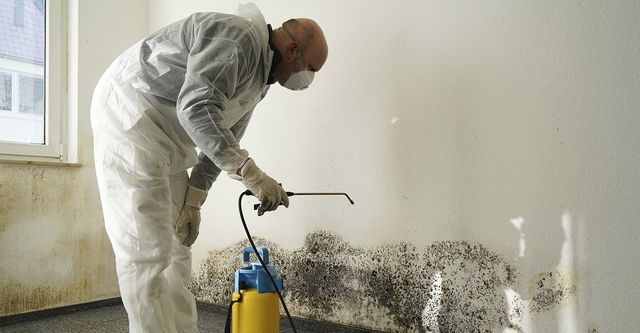
Mold in Texas: climate, risk, and what to look for
Texas's climate and moisture profile
Texas mixes Gulf Coast humidity with hot, wet summers across most of the eastern and central state. Houston, Beaumont, and the coast stay muggy much of the year, while afternoon thunderstorms and tropical systems add heavy rainfall. Even drier West Texas gets sudden downpours that overwhelm drainage.
Common mold risk factors in Texas
Hurricane and tropical-storm flooding is the big driver near the coast, where standing water and wet drywall lead to mold within a day or two. Air conditioning runs nearly nonstop, so condensation around vents, drip pans, and ductwork is a common hidden source. Slab foundations and limited basements push problems into attics, wall cavities, and under-sink cabinets.
Mold licensing and regulation in Texas
Texas does license mold professionals through the Texas Department of Licensing and Regulation (TDLR), covering mold assessors and mold remediators. For jobs over the state's size threshold, a licensed assessor and a separate licensed remediation contractor are typically required, which keeps inspection independent from the cleanup.
Official resources
By metro area
Texas cities by metro area
Dallas-Fort Worth-Arlington, TX (28)
- Fort Worth
- Denton
- Mckinney
- Fate
- Lewisville
- Grand Prairie
- Greenville
- Celina
- Keller
- Balch Springs
- Duncanville
- Haltom City
Plus 16 more in the A-Z list below.
Houston-Pasadena-The Woodlands, TX (15)
- Pearland
- Katy
- Richmond
- The Woodlands
- Cinco Ranch
- Cleveland
- Sienna Plantation
- Freeport
- West University Place
- Fresno
- Fulshear
- Webster
Plus 3 more in the A-Z list below.
Austin-Round Rock-San Marcos, TX (9)
McAllen-Edinburg-Mission, TX (7)
San Antonio-New Braunfels, TX (7)
Beaumont-Port Arthur, TX (4)
Corpus Christi, TX (4)
Waco, TX (4)
Brownsville-Harlingen, TX (3)
El Paso, TX (3)
Longview, TX (3)
El Campo, TX (2)
Killeen-Temple, TX (2)
Lubbock, TX (2)
Rio Grande City-Roma, TX (2)
Sherman-Denison, TX (2)
Abilene, TX (1)
Alice, TX (1)
Amarillo, TX (1)
Athens, TX (1)
Beeville, TX (1)
Borger, TX (1)
Brenham, TX (1)
College Station-Bryan, TX (1)
Corsicana, TX (1)
Del Rio, TX (1)
Eagle Pass, TX (1)
Fredericksburg, TX (1)
Granbury, TX (1)
Hereford, TX (1)
Huntsville, TX (1)
Jacksonville, TX (1)
Laredo, TX (1)
Midland, TX (1)
Mount Pleasant, TX (1)
Nacogdoches, TX (1)
Palestine, TX (1)
Paris, TX (1)
San Angelo, TX (1)
Stephenville, TX (1)
Sulphur Springs, TX (1)
Town of Pecos, TX (1)
Tyler, TX (1)
Uvalde, TX (1)
Victoria, TX (1)
Smaller towns and rural areas (3)
A-Z
All Texas cities A-Z
Every Texas city and town with a page on MoldRemediation.io.
C
O
S
U
Our process
6-step mold remediation in Texas.
The same careful process on every job, from the first call to a thoroughly cleaned and sanitized space.
-
Call MoldRemediation.io
Reach our 24/7 support center and tell us what you are seeing.
-
Mold inspection
A local technician assesses the mold and finds the moisture source.
-
Mold containment
We seal off the area so spores do not spread during the work.
-
Air filtration
HEPA filtration captures airborne spores while the crew works.
-
Mold cleanup
The mold is removed and the affected materials are treated.
-
Sanitization
We sanitize the space and share tips to keep mold from returning.
Our services
Mold services across Texas
FAQ
Mold remediation in Texas: common questions
What does mold remediation in Texas involve?
Remediation starts with the moisture. The crew finds what is feeding the mold, seals off the affected area, removes contaminated materials, then cleans and disinfects what's left. The local crew we connect you with in Texas inspects first and walks you through the plan before any work starts.
Is mold remediation in Texas covered by insurance?
That depends on your policy and on what caused the mold. Homeowners policies often cover mold from a sudden, covered event like a burst pipe. Mold from a slow leak or long-term humidity is often excluded. Policies differ, so ask your insurance agent what yours covers.
How long does mold remediation in Texas take?
It comes down to how far the mold has spread. A small, contained patch can take a day. Jobs with hidden growth or rebuilding can run from several days to a few weeks. The crew gives you a timeline once they've inspected.
Why does my Texas home or business have mold?
Mold grows where moisture meets organic material like wood, drywall, or carpet backing. The usual sources are leaking pipes, roof leaks, flooding, condensation, and high indoor humidity. If the moisture isn't fixed, mold tends to return after cleaning.
How much does mold remediation in Texas cost?
Price depends on the size of the affected area, where the mold is growing, and what has to be torn out and replaced. After inspecting your Texas property, the local crew we connect you with gives you a written estimate, so you see the price before work begins.
Can I remove mold myself?
Sometimes. The EPA says that if the moldy area is under about 10 square feet, you can usually handle it yourself with gloves, eye protection, and a mask. Bigger areas, mold in drywall, carpet, or insulation, and mold that keeps coming back are jobs for a professional.
Is mold remediation really necessary?
Mold releases allergens and irritants that can affect breathing, especially for children, older adults, and anyone with asthma or allergies. It also slowly damages whatever it grows on. Even a problem that looks small is worth having checked.
Will mold come back after remediation?
It can, if the moisture behind it isn't fixed. That's why a proper job deals with the source, whether that's a leak, poor drainage, or humidity, and not only the mold you can see.
Found mold in Texas? Do not wait it out.
Mold spreads within days and damages both air quality and the materials around it.