Service
Mold Removal Contractor
Mold can cause real health problems, and once your home or business is showing spores, a removal contractor should be on the job quickly. Removal is not just cleaning, it is treatment that keeps the mold from spreading again.
How mold removal works
The work starts with a thorough inspection of the affected areas, followed by a clear plan to remove, clean, repair, and prevent a repeat.
The crews we connect you with are not finished until all the mold is gone and every surface has been treated against future growth. If you suspect mold in a home or commercial building, call the experts at MoldRemediation.io today.
A certified diagnosis first
A certified mold removal expert diagnoses the nature and severity of the problem, then uses current methods and equipment to remove the mold and treat the affected areas. You get the right team for the job, matched to your situation.
The equipment a removal crew brings
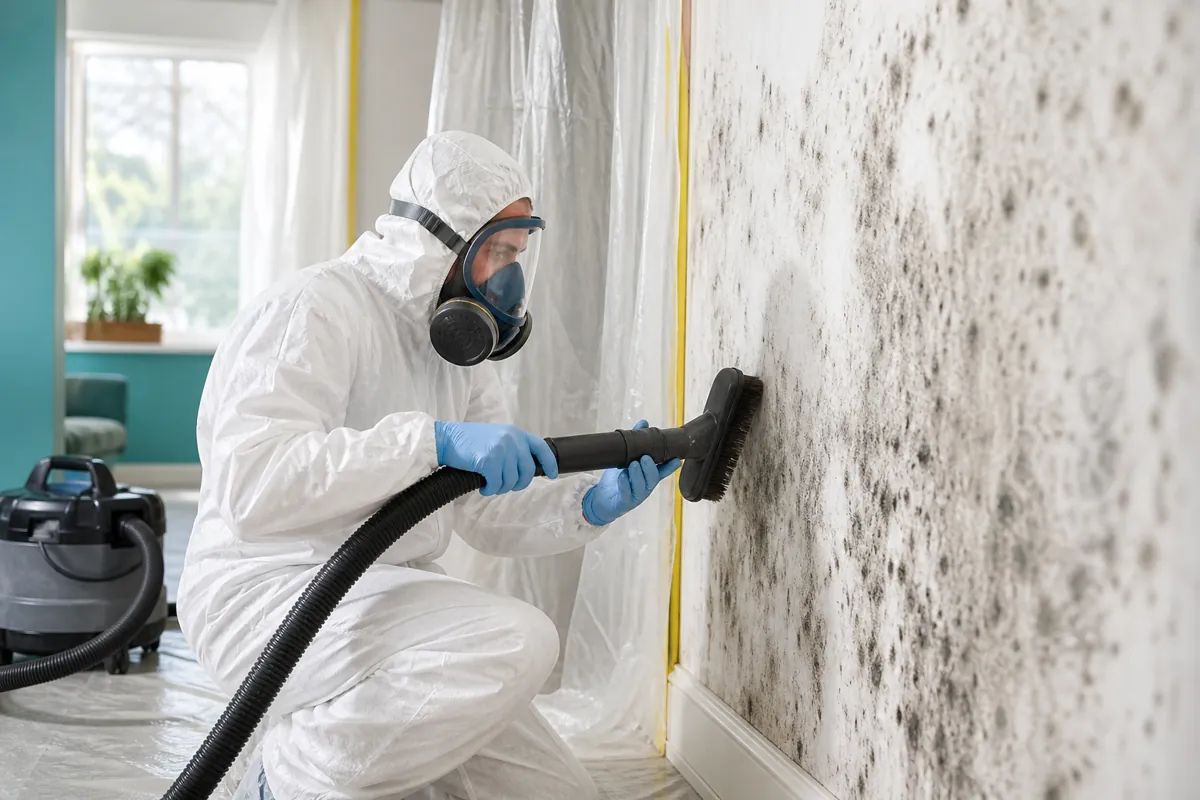
Good removal depends on the right gear, not just scrubbing. Before any material comes out, the crew sets up to capture spores and keep them from drifting into clean rooms. The equipment that does that work:
- HEPA air scrubbers — pull airborne spores out of the room and filter the air on a continuous loop during the job.
- Negative-air machines — hold the work zone at lower pressure than the rest of the building so spores cannot escape into hallways or vents.
- Containment barriers — heavy plastic sheeting and zippered doorways that seal the affected area off from the rest of the home.
- Antimicrobial and biocide treatments — applied to cleaned surfaces to kill remaining spores and slow regrowth.
- Moisture meters and thermal cameras — confirm that framing and drywall are dry before anything gets closed back up, since hidden moisture is what brings mold back.
A typical project timeline
Every job runs on its own clock, but the size of the affected area is the main driver. A small surface patch on a bathroom wall is often a same-day job: set up containment, remove the material, treat the surface, dry it. A larger or structural problem, where mold has reached studs, subfloor, or insulation, usually runs several days, because the materials have to come out, the cavity has to dry, and clearance has to confirm the count is back to normal before rebuild.
These are general ranges, not promises. The crew gives you a scope and timeline after they see the actual spread, since two leaks that look the same on the surface can hide very different damage behind the wall.
What the job includes, start to finish
A complete removal is a sequence, and each step has a point. Skipping any of them is how mold comes back:
- Inspection and scope — confirm where the mold is, how far it reaches, and what is feeding it.
- Containment — seal the area and set up HEPA filtration and negative air before disturbing anything.
- Removal — take out porous materials that cannot be saved, such as soaked drywall, carpet, and insulation.
- Cleaning and treatment — HEPA-vacuum and wipe salvageable surfaces, then apply antimicrobial treatment.
- Drying — bring the structure down to a normal moisture reading so the cavity is not still damp behind new material.
- Clearance and rebuild guidance — verify the work before the containment comes down, then point you to the repair that closes it out.
On this page
Our process
Our 6-step mold remediation process
The same careful process on every job, from the first call to a thoroughly cleaned and sanitized space.
-
Call MoldRemediation.io
Reach our 24/7 support center and tell us what you are seeing.
-
Mold inspection
A local technician assesses the mold and finds the moisture source.
-
Mold containment
We seal off the area so spores do not spread during the work.
-
Air filtration
HEPA filtration captures airborne spores while the crew works.
-
Mold cleanup
The mold is removed and the affected materials are treated.
-
Sanitization
We sanitize the space and share tips to keep mold from returning.
Price ranges
What mold remediation costs
The honest answer is that it depends. So here is what it depends on, with the national ranges from our cost guide, before you pick up the phone.
- Independent professional inspection A standalone inspection with a written report. It can take up to six hours.$200 – $600
- Small surface job One contained area, such as a bathroom wall.$500 – $1,500
- Bathroom$500 – $1,333
- Crawl space$500 – $1,833
- Basement$833 – $3,167
- Attic Depends on the size of the attic and how easy it is to get into.$1,000 – $4,833
- Typical project What most homeowners pay. The national average is around $2,325.$1,500 – $3,150
- Large or structural work$3,000 – $6,000
National averages, not quotes. General pricing runs about $15 to $30 per square foot, and labor about $75 to $120 per hour. An inspection is the only way to get a real number for your home. Read the full cost guide.
Why do two similar jobs come out at different prices? See the five things that move the number
In the order they hit your invoice. The bars show how much each one actually moves it.
-
How much of it is porous
Tile and concrete get cleaned. Drywall, insulation, carpet padding and cardboard get removed and replaced. That split is most of the invoice.
Impact on price: 5 of 5. Biggest single factor
-
Whether the water is still coming in
Remediation on a wall that is still getting wet is money spent twice. Some jobs need a plumber or a roofer first. The crew will tell you if yours does.
Impact on price: 4 of 5. Can double the job
-
How hard it is to reach
A crawl space you have to belly-crawl through costs more than a basement you can walk into, for the same square footage.
Impact on price: 3 of 5. Adds labor hours
-
Which category the water is
Clean supply water, gray water from appliances and sewage are three different protocols, with three different price levels.
Impact on price: 4 of 5. Changes the protocol
-
Whether it needs clearance testing
For a rental, a sale or an insurance claim, you usually want the post-work test. For your own peace of mind, it is optional.
Impact on price: 2 of 5. Optional in most homes
Why homeowners call us
Local crews, no guesswork.
- Vetted independent prosWe match you with vetted independent pros in your area.
- 24/7 emergency responseWater damage spreads fast — our support center answers day or night.
Wondering what it costs? Our mold remediation cost guide breaks down typical price ranges by severity.
FAQ
Frequently asked questions
How much does mold removal cost?
Most mold remediation jobs run between $1,500 and $3,150, or roughly $15 to $30 per square foot. Price depends on how far the mold has spread, where it's growing, and what materials have to be torn out and replaced. The local crews we connect you with give a written estimate after an inspection, so you see the cost for your specific situation before any work starts.
How long does mold removal take?
A small, contained patch can be handled in a day, while jobs involving several rooms or hidden growth behind walls often take three to five days. Drying time, the size of the affected area, and whether materials need to be rebuilt all factor in. The crew you're matched with will lay out a timeline once they've inspected the property.
Is mold removal covered by insurance?
It depends on the cause. Many homeowner policies cover mold when it results from a sudden, covered event like a burst pipe, but they typically exclude mold caused by long-term leaks or deferred maintenance. Read your policy's water-damage and mold language, and document everything with photos. Many of the independent crews we connect you with work directly with insurers and can help with the claim paperwork.
Do I have to leave my house during mold removal?
For small, contained jobs, you can usually stay, since the work area is sealed off with plastic sheeting and negative air pressure to keep spores from spreading. Larger projects, or any work involving heavy demolition or strong chemicals, may mean relocating for a few days. The crew you're matched with will tell you upfront whether staying is safe for your specific job.
Our services
Mold services we connect you with
24/7 emergency response
Found mold? Do not wait it out.
Mold spreads within days and damages both air quality and the materials around it. Call now, and a local crew will take it from here.